1/10 oz Krugerrand 2026 — smallest Crown Gold fractional in the Rand Refinery series since 1967
The Krugerrand 1/10 oz is a gold bullion coin from Rand Refinery and the South African Mint with a gross weight of 3.393 g and 3.110 g of net gold, at 916.7 fineness (22-karat Crown Gold). The obverse carries the Paul Kruger portrait by Otto Schultz from 1892, and the reverse the leaping springbok by Coert Steynberg from 1947. LBMA Good Delivery status (Rand Refinery since 1965), South African legal tender without a face value. GoldInvest24.
Technical specification
| Parameter |
Value |
| Manufacturer |
Rand Refinery (refining) and South African Mint (striking), since 1967 |
| Vintage |
2026 |
| Gross weight |
3.393 g |
| Net gold weight |
3.110 g (0.100 troy oz) |
| Fineness |
916.7/1000 (22-karat Crown Gold) |
| Alloy |
91.67% Au, 8.33% Cu |
| Diameter |
16.5 mm |
| Thickness |
approx. 1.35 mm |
| Face value |
None (South African legal tender without face value) |
| Obverse |
Paul Kruger — Otto Schultz (1892) |
| Reverse |
Springbok — Coert Steynberg (1947) |
| Status |
LBMA Good Delivery (Rand Refinery since 1965) |
| Packaging |
Individual capsule |
Why this coin earns a place in your stack
- Micro Crown Gold fractional: 3.110 g of net gold in a 16.5 mm coin — a compact unit for low-budget DCA strategies or for use as an occasion gift.
- 22-karat Crown Gold: copper alloy (91.67% Au, 8.33% Cu) is mechanically resilient, the Krugerrand standard since the 1967 launch — relevant for coins handled outside a capsule.
- LBMA Good Delivery status: Rand Refinery on the LBMA list since 1965, recognition on secondary markets in Europe, Africa and Asia.
- First modern bullion coin in the world (1967): The Krugerrand opened the bullion-coin segment as a concept and remains a reference point for the whole category — Eagle (1986), Maple Leaf (1979) and others came after it.
- Steynberg springbok unchanged since 1967: the 1947 motif (designed for the South African 5-shilling coin), selected as the Krugerrand reverse in 1967 — one of the longest-maintained coin designs of the 20th century.
History of the Krugerrand series — from 1967 to the 2026 vintage
The Krugerrand was introduced by the South African Mint in 1967 as the world's first modern bullion coin, designed to export South African gold as a coin with standardised mass and fineness. The name combines Paul Kruger's surname (1825-1904), President of the South African Republic 1883-1900, with the South African monetary unit rand introduced in 1961.
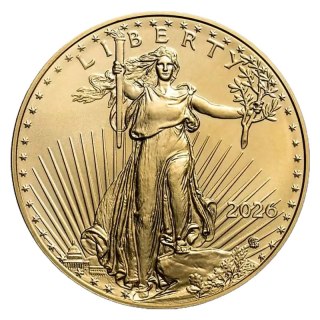
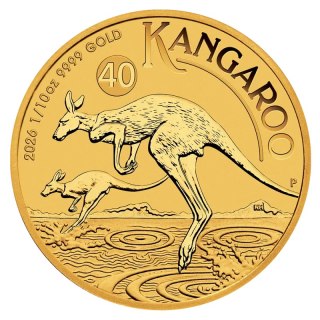
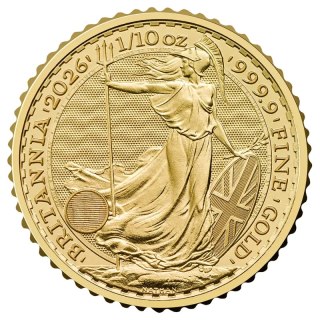
The Krugerrand's commercial success opened the global bullion coin market in the 1970s and 1980s — Maple Leaf (Royal Canadian Mint, 1979), American Eagle (US Mint, 1986), Britannia (Royal Mint, 1987), Vienna Philharmonic (Münze Österreich, 1989) and Australian Nugget/Kangaroo (Perth Mint, 1986/1989) emerged as national-mint responses to demand created by South Africa.
In 1980 the South African Mint added the 1/2 oz, 1/4 oz and 1/10 oz fractionals to the series — a response to retail demand in the US and Europe, where the full ounce Krugerrand exceeded a typical monthly bullion budget. The 1/10 oz fractional today accounts for a meaningful share of the series' retail turnover.
Rand Refinery, opened in 1920 in Germiston, refines most South African gold and received LBMA Good Delivery status in 1965 — two years before the Krugerrand's debut. The South African Mint handles the final striking; the combination of the two operations produces a coin with strong recognition and high secondary liquidity.
During the UN sanctions against South Africa (1985-1994), Krugerrand imports into the US and the UK were restricted, which temporarily reduced the series' global market share. After sanctions were lifted, Krugerrand turnover returned to market levels, and the coin remains one of the most globally recognised.
Obverse — Paul Kruger portrait (Otto Schultz, 1892)
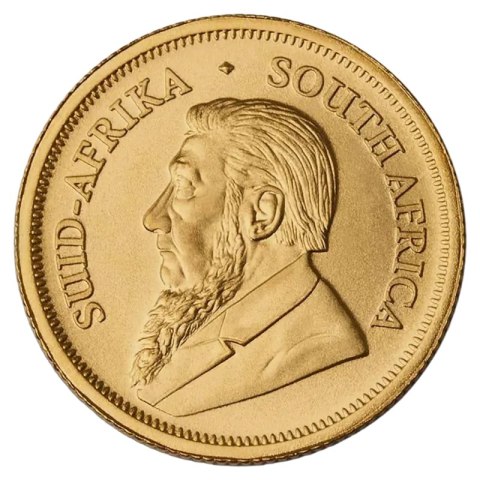
The Krugerrand 1/10 oz obverse shows a bust portrait of Paul Kruger — President of the South African Republic 1883-1900, a leader of the Boer Wars. The portrait is based on a drawing by Otto Schultz from 1892, originally used on the first South African 1-pound coins of 1892 (Kruger Pond).
The obverse carries the inscriptions SUID-AFRIKA / SOUTH AFRICA in the two official languages of South Africa — Afrikaans and English. The coin name KRUGERRAND does not appear on the obverse but on the reverse. The initials OS (Otto Schultz) are visible below the portrait.
The Kruger portrait has remained essentially unchanged since the Krugerrand's debut in 1967 — minor sculptural modifications have been introduced to preserve detail readability in typical bullion production, with no impact on the overall obverse composition.
Reverse — springbok (Coert Steynberg, 1947)
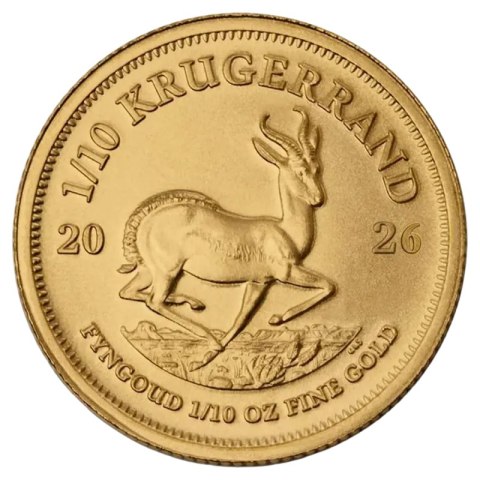
The Krugerrand 1/10 oz reverse depicts a leaping springbok (Antidorcas marsupialis) — the national animal of South Africa — designed by Coert Steynberg in 1947. The motif was originally designed for the South African 5-shilling coin, and in 1967 selected by the South African Mint as the Krugerrand reverse.
The reverse carries the inscriptions KRUGERRAND (top), mass and fineness — 1/10 FYNGOUD GOLD (on both sides) and the year 2026. The combination of Afrikaans and English markings is characteristic of all the series' denominations.
Steynberg's 1947 springbok is one of the longest-maintained reverse designs in modern bullion numismatics — unchanged on the Krugerrand since 1967. The trait sets the series apart from the Kangaroo (annual change since 1989) and the Britannia (changes from 2022), and aligns with the Eagle (Saint-Gaudens 1907) and the Maple Leaf (Ott 1979) in maintaining a fixed motif.
What to check when buying
Inspect the integrity of the original Rand Refinery capsule or blister — damage to the original packaging reduces resale value by a few percent. 22-karat Crown Gold is mechanically more resilient than .9999 fineness, but rim-strike damage can become visible at an angle on the coin's mirrored field.
The small 16.5 mm diameter and 3.393 g gross weight make the coin easy to lose outside its packaging. Storage in the blister or capsule is practical, and 22-karat Crown Gold provides resistance to minor abrasions higher than .9999 fineness — which can be an argument when using the coin as an occasion gift.
The 8-12% markup for 1/10 oz Krugerrand is higher than for 1 oz (3-5%) and reflects the fractional minting cost and distribution margin. The mechanism applies market-wide to all micro-fractionals in the bullion segment — not Krugerrand-specific. When comparing offers, convert the price to net gold per gram (3.110 g) rather than per coin.
The Krugerrand has no monetary face value — South African legislation from 1967 granted the coin legal-tender status without an assigned face value. The mechanism sets the series apart from Eagle (25 USD for 1/4 oz, 5 USD for 1/10 oz), Maple Leaf (5 CAD for 1/10 oz) and Britannia (10 GBP for 1/10 oz). Legal-tender status is recognised within the EU as a condition for VAT exemption.
Why GoldInvest24
- Manufacturers with LBMA accreditation: the catalogue features coins and bars from LBMA-accredited mints and refineries — for the 2026 vintage we cover the full range: Rand Refinery, US Mint, Royal Mint, Perth Mint, PAMP Suisse.
- Language versions PL / DE / EN: full technical descriptions and specifications in three languages for convenient service across Polish, German and international markets.
- Access to current precious-metals quotes: spot data for comparing offer prices with the current market valuation — check the current precious-metals prices before purchase.
- Secure courier shipping with full insurance: shipments are covered by a policy at the full market value of the coins purchased, regardless of order volume.
- Discreet packaging that preserves transaction anonymity: parcels carry no markings indicating precious-metals content — relevant to recipient security.
Comparison of 5 bullion coins of 1/10 oz in the bullion segment
| Feature |
Krugerrand 1/10 oz |
Eagle 1/10 oz |
Maple Leaf 1/10 oz |
Britannia 1/10 oz |
Philharmonic 1/10 oz |
| Fineness |
.9167 |
.9167 |
.9999 |
.9999 |
.9999 |
| Net gold weight |
3.110 g |
3.110 g |
3.110 g |
3.110 g |
3.110 g |
| Diameter |
16.5 mm |
16.5 mm |
16.0 mm |
16.5 mm |
16.0 mm |
| Face value |
None |
5 USD |
5 CAD |
10 GBP |
10 EUR |
| Manufacturer |
Rand Refinery |
US Mint |
RCM |
Royal Mint |
Münze Österreich |
| LBMA Good Delivery |
YES (since 1965) |
NO |
YES |
YES |
YES |
| Typical margin over spot |
8-12% |
10-15% |
9-13% |
10-14% |
10-14% |
Browse the full gold bullion coins category available at GoldInvest24.
FAQ — common questions about the Krugerrand 1/10 oz 2026
What is the Krugerrand 1/10 oz and who makes it?
The Krugerrand 1/10 oz is a gold bullion coin produced by Rand Refinery (refining) and the South African Mint (final striking) in the Republic of South Africa. It has a gross weight of 3.393 g, 3.110 g of net gold, 916.7 fineness (22-karat Crown Gold) and South African legal-tender status without an assigned face value. The Krugerrand is the world's first modern bullion coin, introduced in 1967.
Why does Krugerrand 1/10 oz carry a higher markup than 1 oz?
The minting cost per coin is similar regardless of net gold weight. Divided by a tenfold smaller mass, it yields a higher per-gram margin (8-12% vs 3-5% for 1 oz). This is a mechanism shared across all fractionals in the bullion segment, not Krugerrand-specific — Eagle 1/10 oz has 10-15%, Maple Leaf 1/10 oz 9-13%.
Who were Paul Kruger, Otto Schultz and Coert Steynberg?
Paul Kruger (1825-1904) — President of the South African Republic (1883-1900), a participant in the Boer Wars. Otto Schultz — a German engraver working in London, author of the Kruger portrait of 1892 for the first South African 1-pound coins. Coert Steynberg (1905-1982) — South African sculptor, author of the leaping springbok design of 1947 selected as the Krugerrand reverse in 1967.
Why does the Krugerrand have no monetary face value?
South African legislation from 1967 (South African Mint and Coinage Further Amendment Act) granted the Krugerrand legal-tender status without an assigned face value — the coin's value follows the current gold price. The mechanism sets the Krugerrand apart from Eagle, Maple Leaf or Britannia, which carry symbolic face values. Legal-tender status without face value is recognised within the EU as a condition for VAT exemption.
For whom is the Krugerrand 1/10 oz a practical choice?
For most retail portfolios with a very small monthly budget (around 200-300 euro), the Krugerrand 1/10 oz allows regular purchases in low-value units. It is also chosen as an occasion gift — for its low unit value and mechanical resilience of 22-karat Crown Gold.
Is the Krugerrand 1/10 oz VAT-exempt in the EU?
Yes. The Krugerrand 1/10 oz meets the criteria for VAT-exempt gold bullion within the EU — fineness 916.7 clears 900 with margin, and South African legal-tender status without face value is recognised by Germany's Umsatzsteuergesetz and Poland's VAT legislation under Directive 2006/112/EC. CGT-free status applies only to UK legal-tender coins and does not extend to the Krugerrand.
How do I buy the Krugerrand 1/10 oz 2026 at GoldInvest24?
Place an order in our shop with access to the gold bullion coins category, fractionals from 1/10 oz to 1 oz, and the full range of LBMA-accredited manufacturers. Check the current gold quotes to compare the markup against the current spot price. Technical descriptions and specifications are available in PL / DE / EN language versions.
![[{[item.product.name]}]]([{[item.product.photo.url]}] 75w)