The Chervonets, or 10 Rubles
The Bank of Russia publishes the specification precisely: gold 900, fine gold not less than 7.742 g, total weight 8.603 g with a tolerance of 0.08 g, diameter 22.60 mm, thickness 1.70 mm.
The design dates from 1923, when the Soviet state needed a hard-currency gold coin. It was revived in 1975 and struck until 1982, in the run-up to the Moscow Olympics, as a competitor to the Krugerrand.
Specifications
| Property |
Value |
| Metal |
Gold |
| Fineness |
900 |
| Fine gold |
7.742 g |
| Gross weight |
8.603 g |
| Diameter |
22.60 mm |
| Thickness |
1.70 mm |
| Face value |
1 chervonets (10 rubles) |
| Years |
1923, then 1975 to 1982 |
| Country |
RSFSR, then USSR |
| Mints |
Moscow (MMD) and Leningrad (LMD) |
Not a frozen-date restrike
This is worth being clear about, because it is unusual. The Austrian, Hungarian and Mexican restrikes all carry a frozen date. The Soviet coins do not: they reuse the 1923 design but carry their own year of striking, 1975 through 1982. The date on the coin is therefore real.
A genuine 1923 piece, from a mintage of about 2,751,000, carries a substantial premium over a Soviet-era one. Within the later run, 1982 is by far the scarcest year.
Obverse and reverse
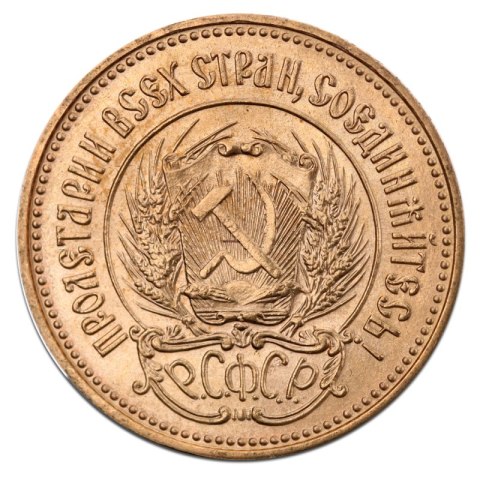
One side carries the state emblem of the RSFSR — hammer and sickle on a shield against sunbeams, in a wreath of wheat ears — with the rim legend calling on the workers of all countries to unite.
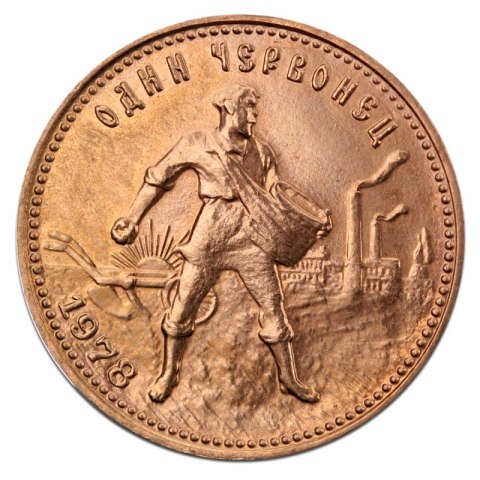
The other shows the Sower: a peasant sowing grain, a plough at his feet, the rising sun to his left and factory chimneys to his right, with ODIN CHERVONETS above and the year below. The edge carries the fine gold content in the old Russian zolotnik measure.
A modern coin not to confuse it with
The Bank of Russia issued a centenary Chervonets in 2023 at 999 fineness, 7.89 g, with the arms of the Russian Federation. It is a different coin from the 900-fine piece described here.
Exactly 900, and why that matters
HMRC’s test for investment gold is a fineness of not less than 900 thousandths. This coin is exactly 900. It clears the threshold, but with nothing to spare — a coin a shade below that line would attract VAT as a collectable rather than being treated as investment gold.
VAT and UK capital gains tax
HMRC treats a coin minted after 1800 as investment gold if it is at least 900 thousandths fine, is or has been legal tender in its country of origin, and normally sells at no more than 180 per cent of the open market value of its gold (VAT Notice 701/21A). The Chervonets is 900 fine, was Soviet legal tender and is sold close to the gold price, so it meets all three tests.
Capital gains tax is a separate matter. The UK exemption follows sterling legal tender, so it covers Sovereigns and Britannias but not a Russian coin. This is a statement of the published rule, not tax advice — your own position depends on your circumstances.
Questions buyers ask
Are the 1975 to 1982 coins restrikes? They reuse the 1923 design but carry their own dates, so they are new issues rather than frozen-date restrikes.
How much gold does it contain? Not less than 7.742 g of pure gold, per the Bank of Russia.
Is a 1923 coin worth more? Yes, considerably. It is the original issue and much scarcer than the Soviet-era coins.
Which date will I receive? A mixed date as available, normally from the 1975 to 1982 run.
Authenticity checked at GoldInvest24 before dispatch. Other sizes are on the historic gold coins page. Live quotes on the precious metals prices page.
![[{[item.product.name]}]]([{[item.product.photo.url]}] 75w)