![[{[item.product.name]}]]([{[item.product.photo.url]}] 75w)
For free delivery are missing -,--
Order Summary
Sum 0,00 £
Price includes discounts
Sovereign Gold Coins
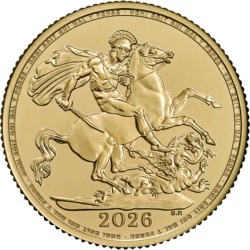
Number of products: 20The Sovereign is the world's longest-running gold bullion coin — minted continuously since 1817 by The Royal Mint. Each coin contains 7.32 g of fine gold (0.2354 oz) in a 22-carat alloy (916.7/1000) and features the iconic St George and the Dragon reverse by Benedetto Pistrucci. At GoldInvest24, three variants are available: Sovereign (7.32 g Au), Half Sovereign (3.66 g Au) and Double Sovereign (14.63 g Au) — in vintages from Queen Victoria to Charles III. As bullion gold, the Sovereign is VAT-exempt across the EU (Directive 2006/112/EC Art. 344). In the United Kingdom, it is additionally exempt from Capital Gains Tax (CGT) as legal tender. Check current prices on our precious metals prices page.

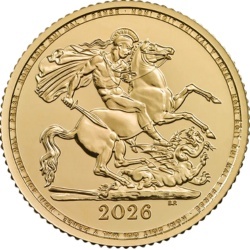
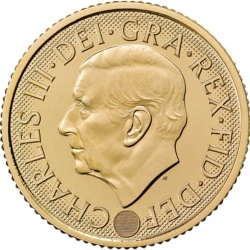
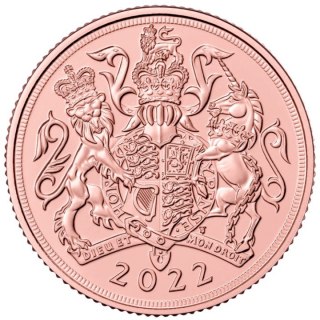
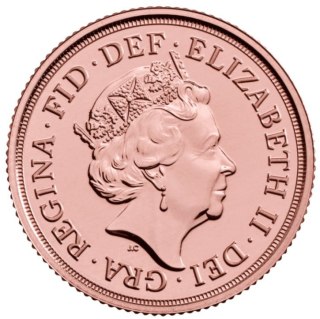
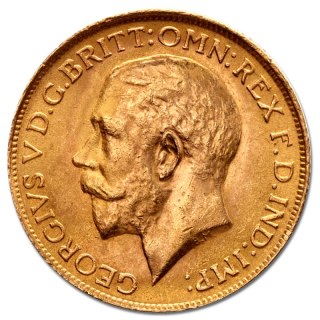
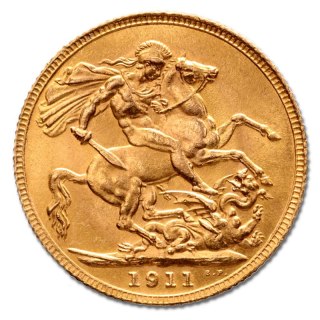
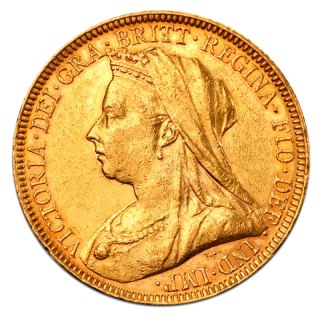
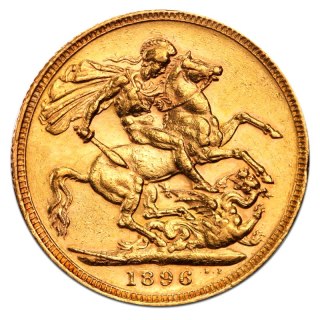
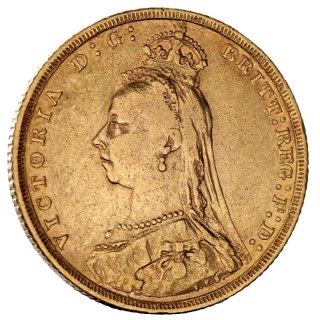
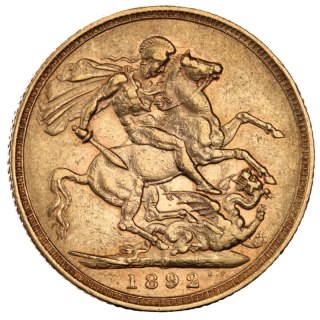
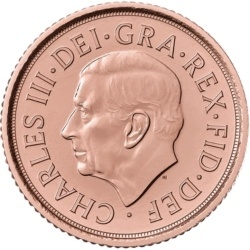
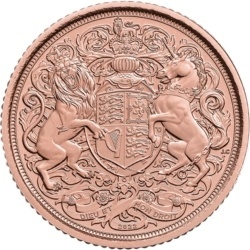
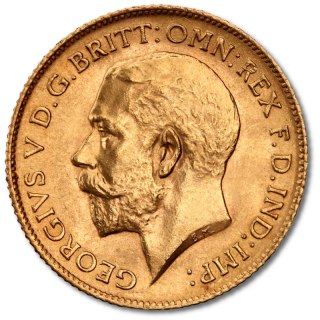
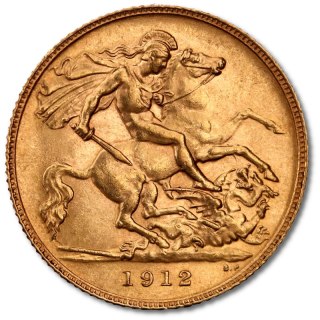
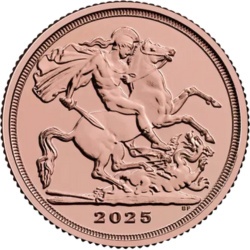
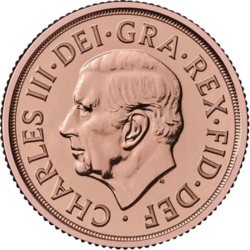
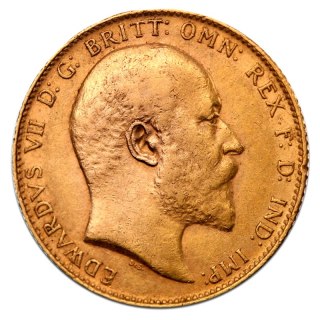
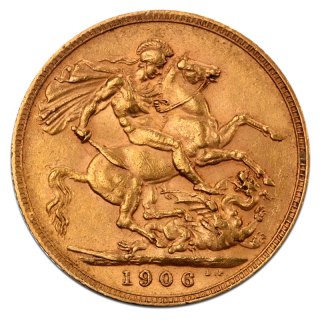
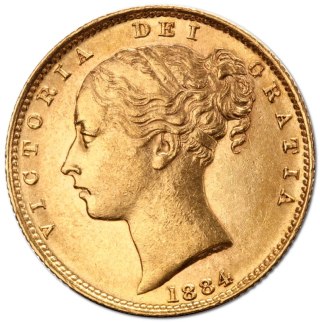
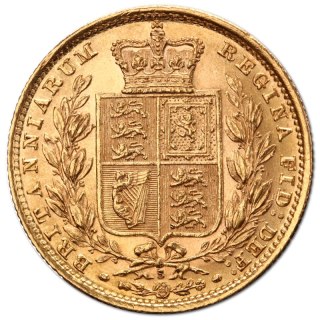
History of the Sovereign — From 1817 to Charles III
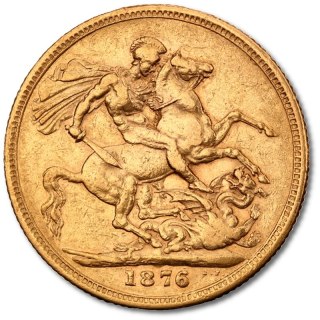
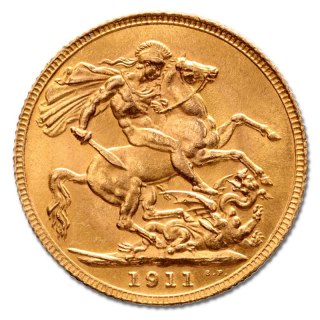
The first modern Sovereign was struck in 1817 as part of Britain's currency reform after the Napoleonic Wars — the coin replaced the guinea and received a face value of one pound sterling (20 shillings). The reverse was designed by Italian engraver Benedetto Pistrucci — the scene of St George on horseback slaying the dragon became one of the most iconic numismatic compositions in history.
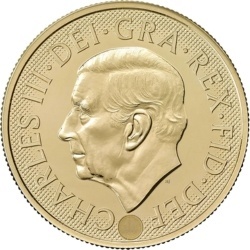
In the 19th and early 20th centuries, Sovereigns were the official currency of the British Empire — struck at mints across several continents: London, Sydney, Melbourne, Perth, Bombay, Ottawa and Pretoria. After the gold standard was abandoned in 1932, circulation Sovereign production ceased. It resumed in 1957 under Elizabeth II as a bullion coin. Since 2023, the obverse features the portrait of King Charles III.
Obverse — Monarch Portraits Since 1817
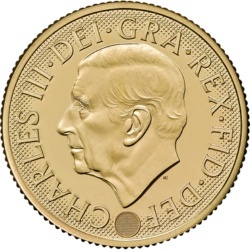
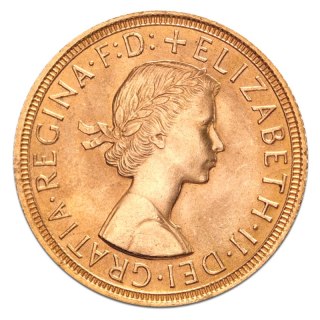
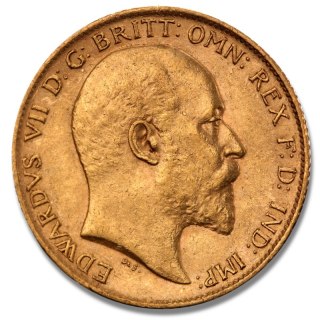
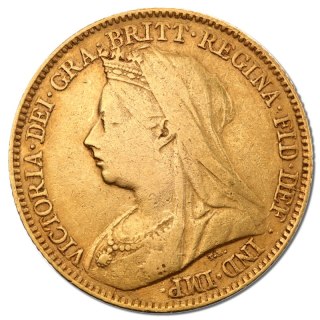
The obverse of the Sovereign depicts the reigning monarch — the only bullion series that documents over two centuries of British royal succession:
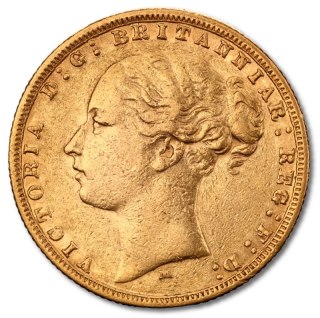
- Queen Victoria "Young Head" (1838–1887) — portrait by William Wyon
- Queen Victoria "Jubilee" (1887–1893) — portrait by Joseph Boehm
- Queen Victoria "Old Head" (1893–1901) — portrait by Thomas Brock
- Edward VII (1902–1910) — Sovereigns from Empire mints
- George V (1911–1932) — last circulation Sovereigns before the gold standard ended
- Elizabeth II (1957–2022) — resumption as a bullion coin
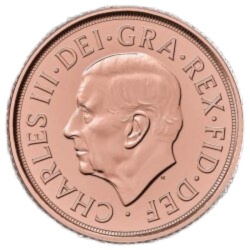
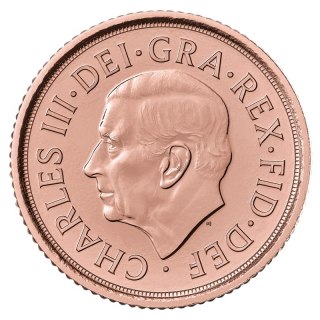
- Charles III (from 2023) — definitive portrait by Martin Jennings
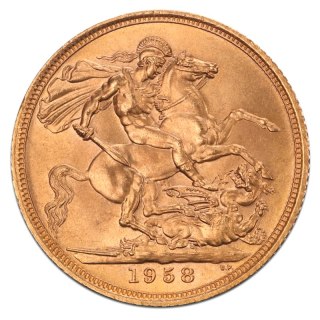
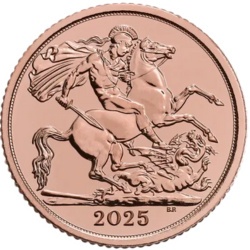
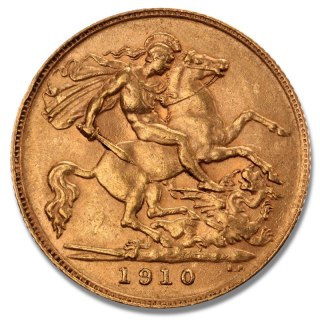
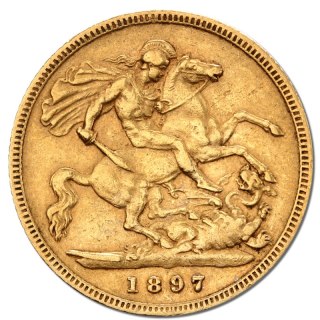
Reverse — St George and the Dragon
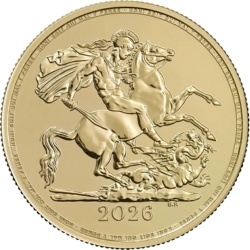
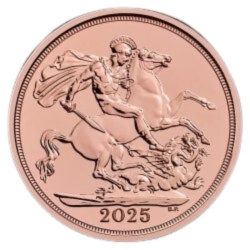
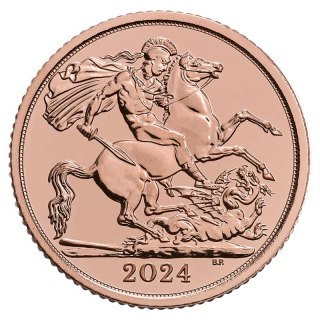
The reverse features the work of Benedetto Pistrucci from 1817 — a dynamic scene of St George on horseback slaying the dragon. It is one of the longest-used coin motifs in the world. Pistrucci's signature "B.P." appears beneath the battle scene. The composition has been modified in detail over two centuries but has retained its original layout throughout.
Technical Specifications
| Parameter | Half Sovereign | Sovereign | Double Sovereign |
|---|---|---|---|
| Fine gold content | 3.66 g (0.1177 oz) | 7.32 g (0.2354 oz) | 14.63 g (0.4708 oz) |
| Fineness | 916.7/1000 (22 ct) | 916.7/1000 (22 ct) | 916.7/1000 (22 ct) |
| Gross weight | 3.99 g | 7.98 g | 15.98 g |
| Diameter | 19.30 mm | 22.05 mm | 28.40 mm |
| Thickness | 0.99 mm | 1.52 mm | 2.00 mm |
| Face value | 10 shillings (½ £) | 1 pound sterling (£1) | 2 pounds (£2) |
| Reverse | St George & Dragon (Pistrucci) | St George & Dragon (Pistrucci) | St George & Dragon (Pistrucci) |
| Edge | Milled | Milled | Milled |
| VAT | Exempt | Exempt | Exempt |
Crown Gold Alloy — 22 Carat
The Sovereign is struck in 916.7/1000 fineness — so-called Crown Gold — gold alloyed with copper. This is the same standard as the Krugerrand and American Eagle. The copper addition (83.3/1000) gives the Sovereign its characteristic warm, rose-gold hue and significantly increases scratch resistance compared to 999.9 coins. Sovereigns from the 19th century are often found in excellent condition after more than a hundred years. The gross weight (7.98 g) exceeds the fine gold content (7.32 g) — valuation is based on the 7.32 g Au.
VAT Exemption and CGT
Sovereigns meet the criteria for investment gold under Directive 2006/112/EC Art. 344–346: fineness above 900/1000, minted after 1800, legal tender status. The purchase price includes no VAT. The exemption applies in all EU member states.
In the United Kingdom, the Sovereign carries an additional tax advantage — as legal tender (face value £1), it is exempt from Capital Gains Tax (CGT). This benefit is shared only with the Britannia.
Sovereign and 1 oz Coins — Format Difference
The Sovereign is not a 1 oz coin — it contains 0.2354 oz (7.32 g) of fine gold, approximately one quarter of a troy ounce. A significant difference from 1 oz coins (31.1035 g Au) such as the Krugerrand, Britannia, Maple Leaf or Wiener Philharmoniker. The Sovereign stands out for its over two-hundred-year history, lower entry threshold and unique historical value of individual vintages.
Why GoldInvest24?
At GoldInvest24, the full range of Sovereigns is available — from bullion vintages under Elizabeth II and Charles III to historic issues under Victoria, Edward VII and George V. All coins come from authorised Royal Mint distributors. Explore also:
- Gold bullion coins — all series and weights
- Gold bars — from 1 g to 1 kg, Valcambi, Argor-Heraeus, PAMP, Umicore, C.Hafner
- Silver bullion coins — precious metals portfolio diversification
- Platinum and palladium — platinum group metals
FAQ — Frequently Asked Questions About Gold Sovereigns
How much gold does a Sovereign contain?
A Sovereign contains 7.32 g of fine gold (0.2354 oz) in a 22-carat alloy (916.7/1000). The gross weight is 7.98 g — the remaining 0.66 g is copper. A Half Sovereign contains 3.66 g Au (gross 3.99 g), a Double Sovereign 14.63 g Au (gross 15.98 g).
Is the Sovereign a 1 oz coin?
No. The Sovereign contains 0.2354 oz of fine gold (7.32 g) — approximately one quarter of a troy ounce. 1 oz coins (31.1035 g Au) are a separate category: Krugerrand, Britannia, Maple Leaf, Wiener Philharmoniker, American Eagle, Kangaroo and Chinese Panda 30 g.
Is the Sovereign VAT-exempt?
Yes. The Sovereign meets the criteria for investment gold under Directive 2006/112/EC Art. 344. The purchase price includes no VAT. In the United Kingdom, it is additionally exempt from Capital Gains Tax (CGT) as legal tender.
How does the Sovereign compare to the Krugerrand?
Both are struck in 22-carat alloy (916.7/1000), but differ in weight: the Krugerrand contains a full troy ounce (31.1035 g Au), the Sovereign — 0.2354 oz (7.32 g Au). The Krugerrand has been minted since 1967 (South African Mint), the Sovereign since 1817 (The Royal Mint).
What do the different portraits on Sovereigns mean?
The obverse depicts the reigning monarch: Queen Victoria (three variants: Young Head 1838–1887, Jubilee 1887–1893, Old Head 1893–1901), Edward VII (1902–1910), George V (1911–1932), Elizabeth II (1957–2022), Charles III (from 2023). Older vintages may carry higher value due to numismatic factors.
Sovereign or Half Sovereign?
The Sovereign (7.32 g Au) offers a more