1000 Schilling, Babenberger 1976
13.5 g gross, 900 fine, holding 12.15 g of pure gold, 27 mm across and 1.6 mm thick.
Struck in 1976 only, for the thousandth anniversary of the installation of the Babenberg dynasty in Austria in 976. It was demonetised on 28 February 2002 with the changeover to the euro.
Specifications
| Property |
Value |
| Metal |
Gold |
| Fineness |
900 |
| Fine gold |
12.15 g |
| Gross weight |
13.5 g |
| Diameter |
27 mm |
| Thickness |
1.6 mm |
| Face value |
1000 schilling |
| Year |
1976 only |
| Country |
Austria |
| Mint |
Muenze Oesterreich |
The two sides
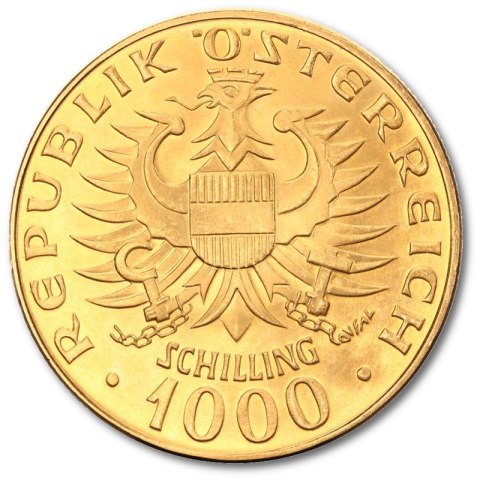
One side carries the Austrian eagle with a mural crown, a broken chain, and a sickle and hammer, with REPUBLIK OESTERREICH and the denomination. It is by Martha Coufal-Hartl.
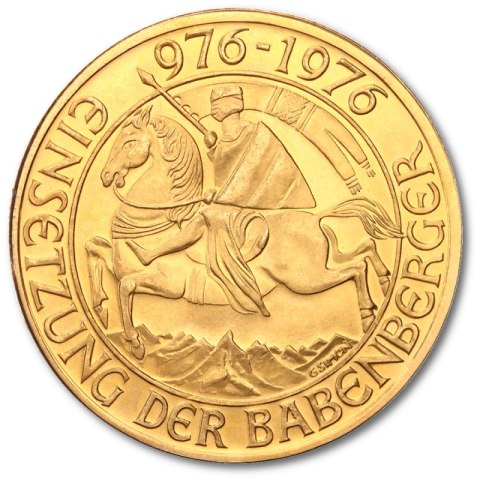
The other shows a mounted knight taken from the equestrian seal of Duke Friedrich II, with banner and shield and the inscription marking 976 to 1976. It is by Gertrude Simon.
A commemorative that trades as bullion
Two secondary sources put the mintage at roughly 1.8 million, which is large for a commemorative; we have not found confirmation from the Austrian Mint itself, so treat the figure as approximate. At that scale the coin normally trades on its gold content rather than at a collector premium.
Exactly 900, and why that matters
HMRC’s test for gold bullion is a fineness of not less than 900 thousandths. This coin is exactly 900. It clears the threshold, but with nothing to spare — a coin a shade below that line would attract VAT as a collectable rather than being treated as bullion gold.
VAT and UK capital gains tax
HMRC treats a coin minted after 1800 as bullion gold if it is at least 900 thousandths fine, is or has been legal tender in its country of origin, and normally sells at no more than 180 per cent of the open market value of its gold (VAT Notice 701/21A). The coin is 900 fine, was Austrian legal tender and is sold close to the gold price, so it meets all three tests.
Capital gains tax is a separate matter. The UK exemption follows sterling legal tender, so it covers Sovereigns and Britannias but not an Austrian coin. This is a statement of the published rule, not tax advice — your own position depends on your circumstances.
Questions buyers ask
How much gold does it contain? 12.15 g of pure gold in a 13.5 g coin at 900 fineness.
Was it struck in other years? No. 1976 is the only date.
Is it still legal tender? No. It was demonetised in February 2002. That does not affect its status as bullion gold, which asks only whether a coin is or has been legal tender.
Is it a rare coin? Not on the mintage figures available, which are around 1.8 million. It normally trades close to its gold value.
Authenticity checked at GoldInvest24 before dispatch. Other sizes are on the historic gold coins page. Live quotes on the precious metals prices page.
![[{[item.product.name]}]]([{[item.product.photo.url]}] 75w)