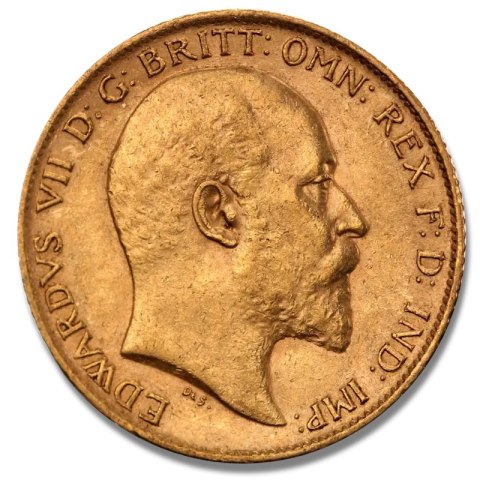
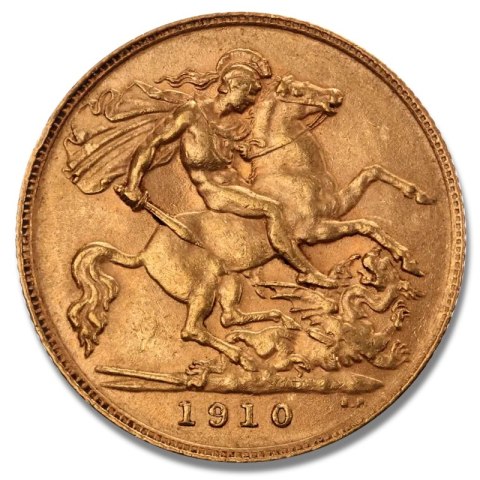
Half Sovereign, Edward VII
3.99 g gross at 22 carat, holding 3.6612 g of pure gold, 19.30 mm across. Struck during the reign of Edward VII, 1902 to 1910.
The obverse portrait is by George William de Saulles; the reverse is Benedetto Pistrucci’s St George and the dragon, first used on the Sovereign in 1817.
Specifications
| Property |
Value |
| Metal |
Gold |
| Fineness |
916.67 (22 carat) |
| Fine gold |
3.6612 g |
| Gross weight |
3.99 g |
| Diameter |
19.30 mm |
| Face value |
half a pound |
| Country |
United Kingdom |
| Mint |
The Royal Mint |
| Reverse |
St George and the dragon, by Benedetto Pistrucci |
| Years |
1902 to 1910 |
| Obverse |
King Edward VII, by G. W. de Saulles |
Why UK coins are treated differently
HMRC exempts sterling currency from capital gains tax, and the exemption reaches Sovereigns minted in 1837 and later and Britannias because they are current UK legal tender denominated in pounds. A Krugerrand, a Vreneli or an American Eagle is a chargeable asset by the same logic.
One point that catches people out: pre-1837 Sovereigns are not covered. They are no longer legal tender, so they are treated as chattels instead, under the chattels rules rather than the currency exemption.
A coin the size of a fingernail
At 19.30 mm the Half Sovereign is small, and it circulated hard. Most surviving examples show wear. That does not change the gold content in any way that matters for a bullion purchase, but it does mean condition varies from coin to coin.
VAT and UK capital gains tax
HMRC treats a coin minted after 1800 as bullion gold if it is at least 900 thousandths fine, is or has been legal tender in its country of origin, and normally sells at no more than 180 per cent of the open market value of its gold (VAT Notice 701/21A). The Half Sovereign is 916.67 fine, UK legal tender and sold close to the gold price, so it meets all three tests.
It is also a United Kingdom coin with a face value in pounds, so it is sterling legal tender. The UK exemption from capital gains tax follows sterling legal tender, which is why Britannias and Sovereigns sit outside that tax while a Krugerrand, Maple Leaf or Philharmonic does not. This is a statement of the published rule, not tax advice — your own position depends on your circumstances.
Questions buyers ask
How much gold does it contain? 3.6612 g of pure gold in a 3.99 g coin at 916.67 fineness.
Is it exempt from capital gains tax? For UK residents, yes. It is sterling legal tender, which is what the exemption follows.
Which date will I receive? A mixed date from the 1902 to 1910 range, as available.
Why is it 22 carat rather than fine gold? Because British circulating gold has been struck at 22 carat since 1816. The copper hardens the coin.
Authenticity checked at GoldInvest24 before dispatch. Other sizes are on the Sovereign gold coins page. Live quotes on the precious metals prices page.
![[{[item.product.name]}]]([{[item.product.photo.url]}] 75w)